SWAPP: Severe Weather Emergency Response
15x operational capacity growth. How automation unlocked massive scale without adding headcount
The Challenge
During Colorado winters, people experiencing homelessness face life-threatening cold. Adams County's Severe Weather Action Plan (SWAP) distributed hotel vouchers, but the process was slow: a 4-page paper intake form that took 11 minutes per person, forcing people to wait in freezing temperatures while caseworkers processed paperwork.
Centralized intake meant people had to choose between their belongings and shelter. With no guarantee a room would still be available when they reached the front of the line. The program could only serve 60-80 people per night, leaving hundreds without help.
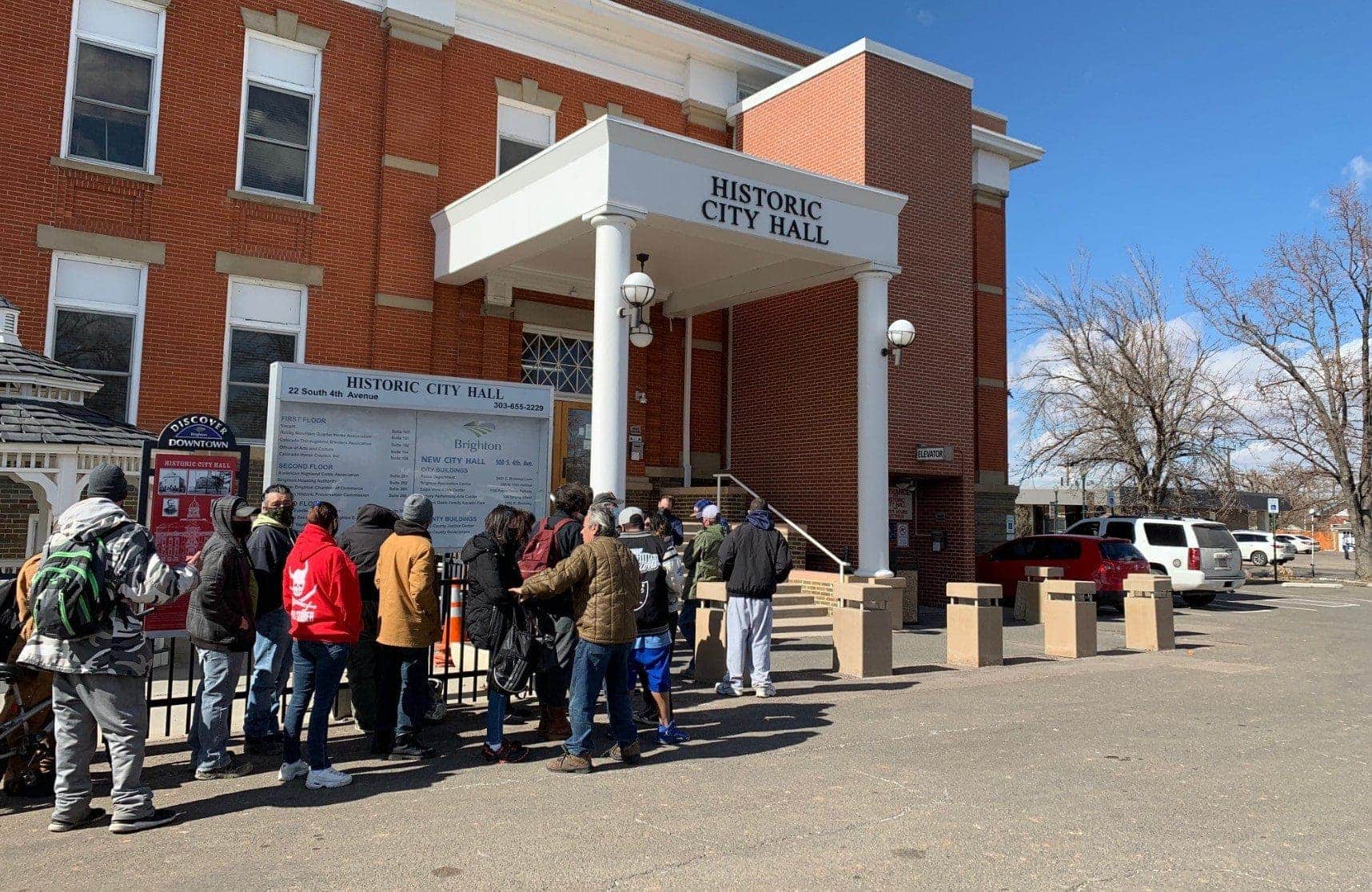
Long lines at Historic City Hall during cold weather: the centralized intake bottleneck
The Pivot
As part of a Code for America fellowship team, we initially wanted to build a smartphone app for people experiencing homelessness. Then we learned the reality: only 10% had internet access. A "cool, shiny app" would exclude 90% of the people who needed help.
After 21 caseworker interviews, 10 stakeholder meetings, and 5 outreach visits, we pivoted: build for the caseworkers instead. Give them tools to work faster, and they'll reach more people.
The Realization
Technology alone can't solve homelessness. But it can free up caseworkers' time so they can focus on what matters: connecting with people and getting them shelter fast.
What We Built
A web-based intake system that replaced the 4-page paper process with a streamlined digital form. Caseworkers could now work in the field with tablets, meeting people where they were instead of forcing them to come to city hall.
Key Features
Built the first working prototype in a single weekend. Refined it based on caseworker feedback, then deployed to production within weeks.
The Impact
Faster intake: From 11 minutes to 2.5 minutes per person
Increased capacity: 8,300+ nights of shelter provided vs. 500 the previous year
People served: During the 2020-2021 cold weather season
Record month: Vouchers distributed in February 2021 alone
"[The app] has allowed me to go through the line faster, and [our clients'] anxiety has decreased because they don't have to fill out so much paperwork, and it has allowed them to speak up more on their needs."
- Nubia Saenz, Almost Home caseworker
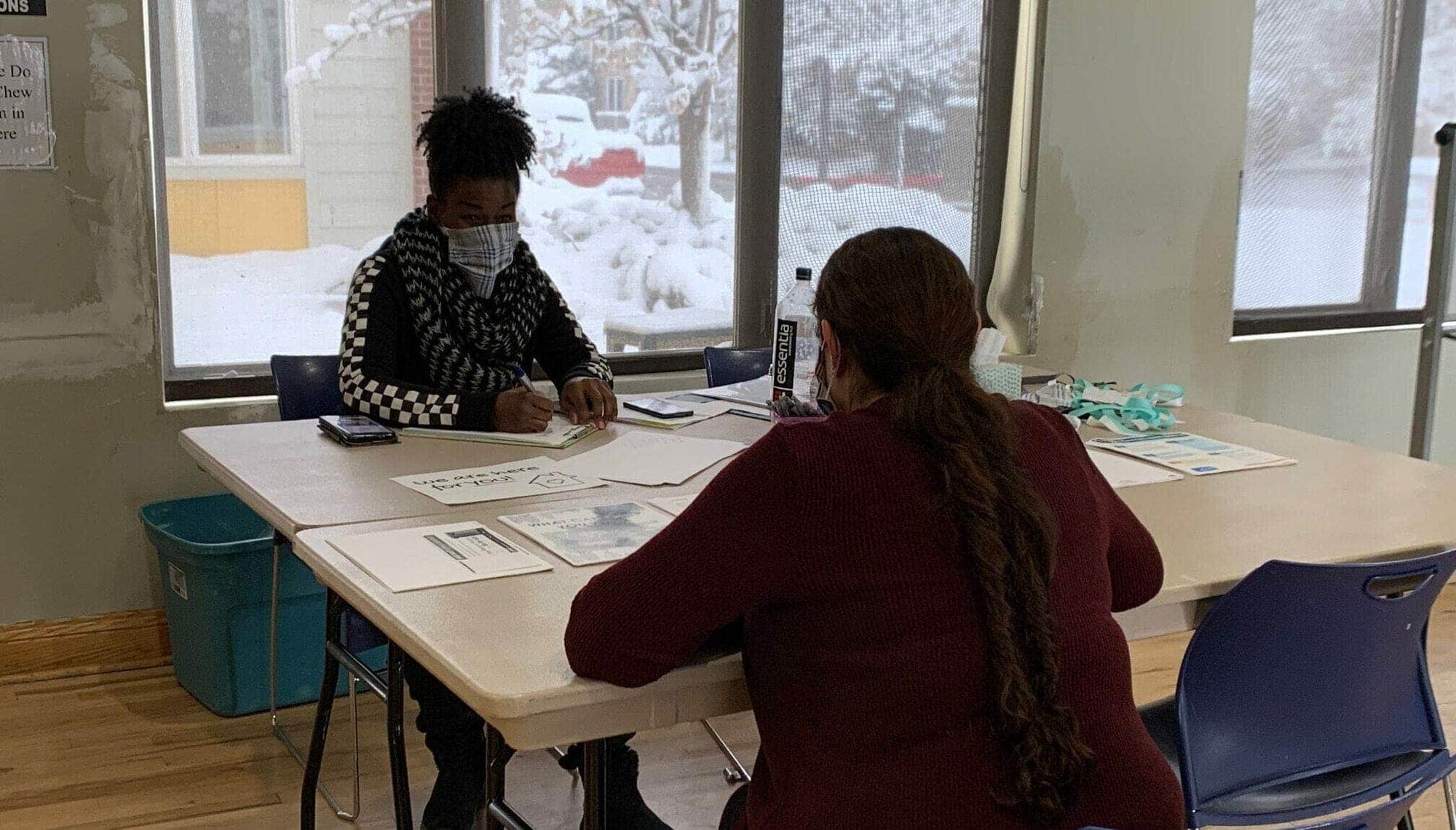
Field-ready digital intake in action, meeting people where they are during severe weather
The Engineering
Built for speed and reliability under real-world constraints: caseworkers working in the field, spotty connectivity, and emergency response timelines.
Rapid Prototyping
Weekend sprint from concept to working demo. Showed it to stakeholders Monday morning, got approval, and iterated based on real caseworker feedback before cold weather hit.
Field-Ready Design
Mobile-responsive interface that works on tablets in freezing temperatures. Offline considerations for spotty connectivity. Fast load times when every second counts.
Integration Architecture
Connected to Twilio for SMS, SendGrid for email, and HMIS for data export. Built secure credential management for handling sensitive information about vulnerable populations.
Tech Stack
- • Ruby on Rails
- • PostgreSQL
- • Tailwind CSS
- • JavaScript/Webpack
Integrations
- • Twilio (SMS)
- • SendGrid (Email)
- • HMIS (Data Export)
- • Heroku (Deployment)
What This Demonstrates
Know when NOT to build. The "obvious" solution (a smartphone app for people experiencing homelessness) would have failed. User research revealed the real need: tools for caseworkers.
Rapid iteration under pressure. Went from weekend prototype to production system in weeks, during an active emergency. Shipping working software fast matters more than perfection.
Government/civic stakeholder management. Worked with county staff, nonprofit organizations, and field workers to build something that actually fit their workflow instead of forcing them to adapt to our software.
Building with constraints. No smartphones, no internet, field conditions, emergency timelines. Real-world software means working within real-world limitations.


Partnered with Adams County, Colorado and Adams County Office of Community Safety & Wellbeing to build this system for their emergency weather response program.
Ready to unlock operational capacity?
We build automation systems that help you serve more customers without adding headcount. Let's talk about your growth goals.
Schedule a Growth Call
Book a free 20-minute conversation about growing your business.
- ✓Identify your biggest growth bottleneck
- ✓Honest assessment of what will move the needle
- ✓Zero pressure or commitment required
- ✓Clear next steps if we're a good fit
20 minutes · No commitment